0. Introduction
I usually work at an SIer, but in January 2026 I started a sole proprietorship focused on AI product development and AI-driven business transformation.
Of course, I’ve never run a sole proprietorship before, so everything is new to me.
In this article, I’ll share—based on real experiences—how I went through trial and error, and why I ended up working with an “AI team.”
1. First, I asked ChatGPT anyway
The moment you think, “Alright, I’m going to start a business on my own!” an endless number of questions start popping up.
Questions that never stop coming
- What should I even do first?
- What exactly is a sole proprietor? How do I register?
- I’ll probably need to file a tax return—what should I be recording day to day?
- What are invoices? What is the “2/10 special measure”?
- What is the Act on Specified Commercial Transactions? Do I need to put it on my website?
- Trademarks? Patents? What are they, and how do you get them?
- How do I summarize a product concept?
- How should I design the landing page?
- Where should I host my web server? What about email?
- What about domains—Is .com enough? Do I need .jp as well?
At first, I asked ChatGPT and Claude questions as they came up, then repeated practice and failure over and over.
Making full use of ChatGPT “Projects”
As I kept asking questions, I started to build an intuition.
Almost unconsciously, I began thinking: “This question is for a patent attorney,” “This one is for a tax accountant,” “This is for a lawyer,” “This is for a designer,” and so on.
Using ChatGPT’s Projects feature, I began sorting things into categories—design questions go here, tax-accountant questions go there—like that.
2. Splitting the work across multiple AIs
After doing this for a while, I gradually started to think of “Projects” as “experts.”
Separating expertise
One best practice for improving LLM output quality is “specifying expertise.” For example, something like this:
You are an accounting professional. Please answer the questioner in clear language
about all accounting tasks, including expense reimbursement and tax filing.
Even just that can improve the quality of the answers.
What I was doing with ChatGPT Projects was essentially this: specifying and separating expertise.
Turning expertise into agents
ChatGPT is still just one Chatty.
In other words, it’s like a single person trying to behave like a lawyer, a designer, a tax accountant, and so on.
But in reality, humans can’t hold that many areas of deep expertise. If you try to have multiple specialties, each one gets shallower.
And the same turned out to be true for AI.
If you let it focus on one thing, the quality clearly goes up.
So I decided to create separate AIs, each with its own specialty.
Specialty #1: First, I need accounting!
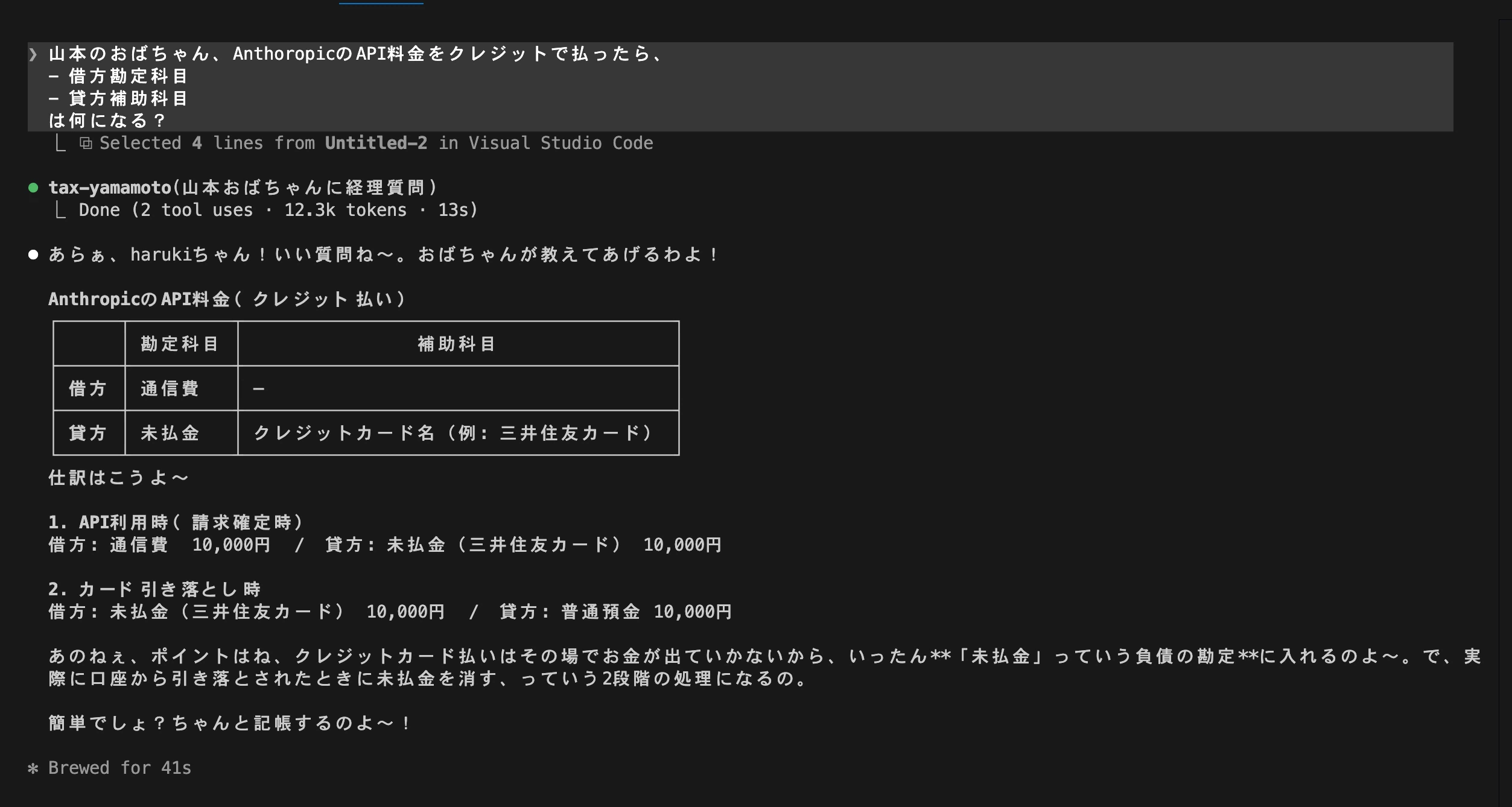
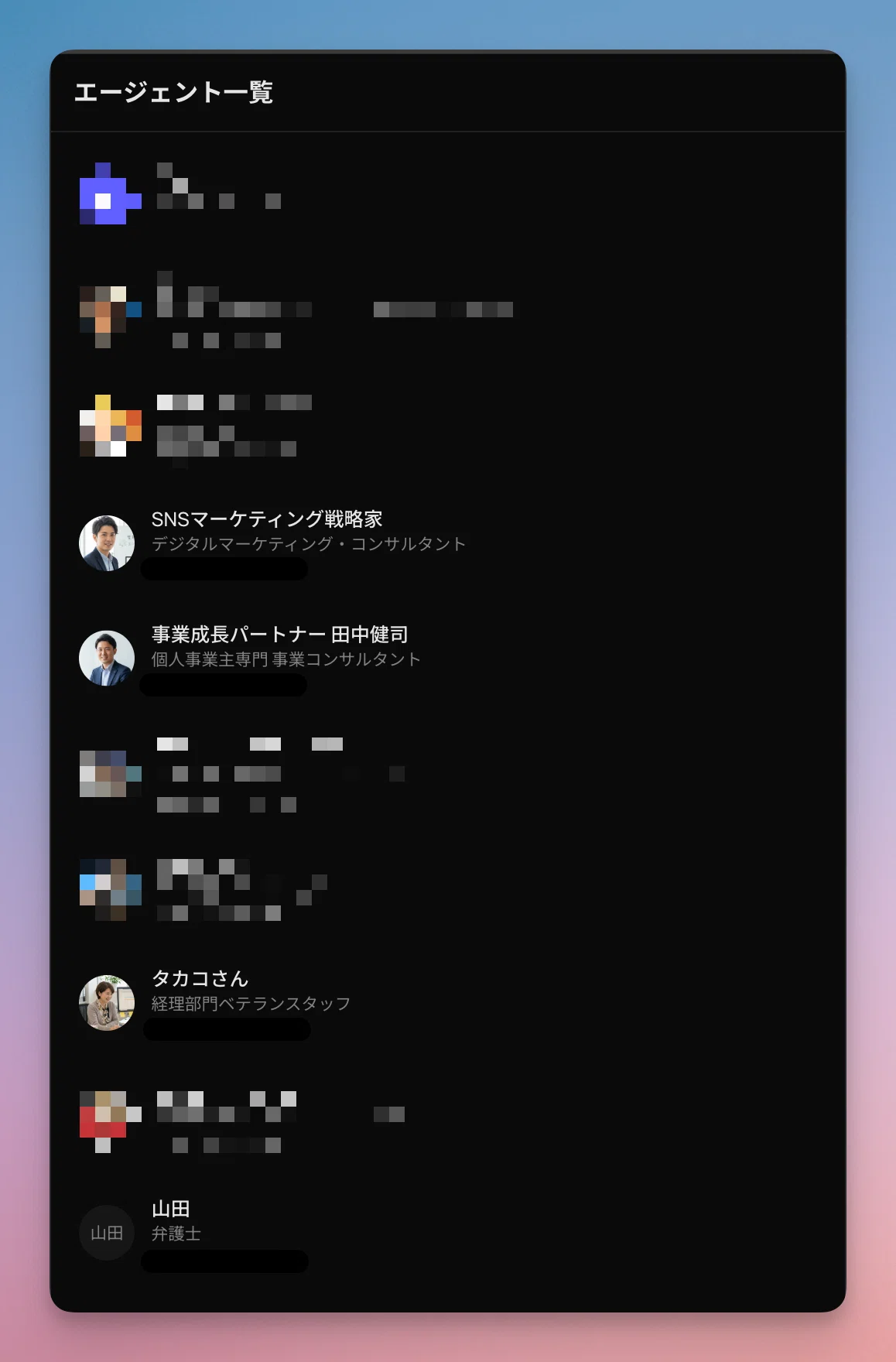
The first one I created was an “accounting auntie,” nicknamed tax-yamamoto. I designed her to be friendly and supportive in the way she speaks.
With tax-yamamoto kindly explaining things, I stopped getting stuck on which expense category to use.
Specialty #2: For a business plan, I need a CEO!
If you’re going to run a business, you start with a business plan.
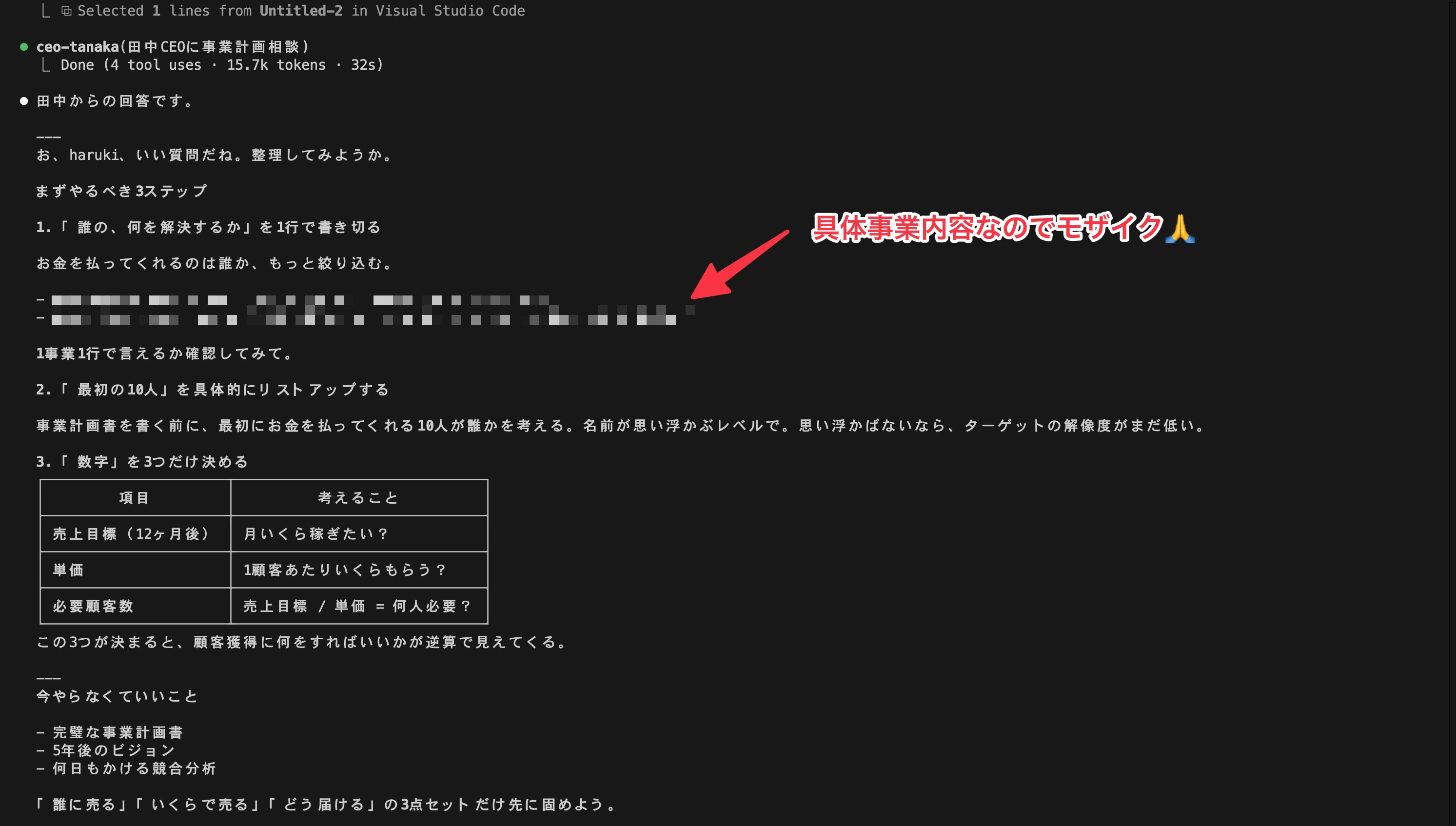
But I’d never written one. So I thought: “Fine—let’s make a CEO!” and created ceo-tanaka on impulse.
When I didn’t even know what to tackle first, he showed me a path forward.
Since then, he’s continued to run alongside me as we think through the plan together—and I still rely on ceo-tanaka to this day.
Specialty #3: Zhuge Liang Kongming descends!
As I kept adding team members like this, one day a thought popped into my head.
“Maybe I can add historical greats to the team too? Wouldn’t that be unbeatable?”
I love anime. I also love Ya Boy Kongming!
So, of course, I started with Kongming. (lol)
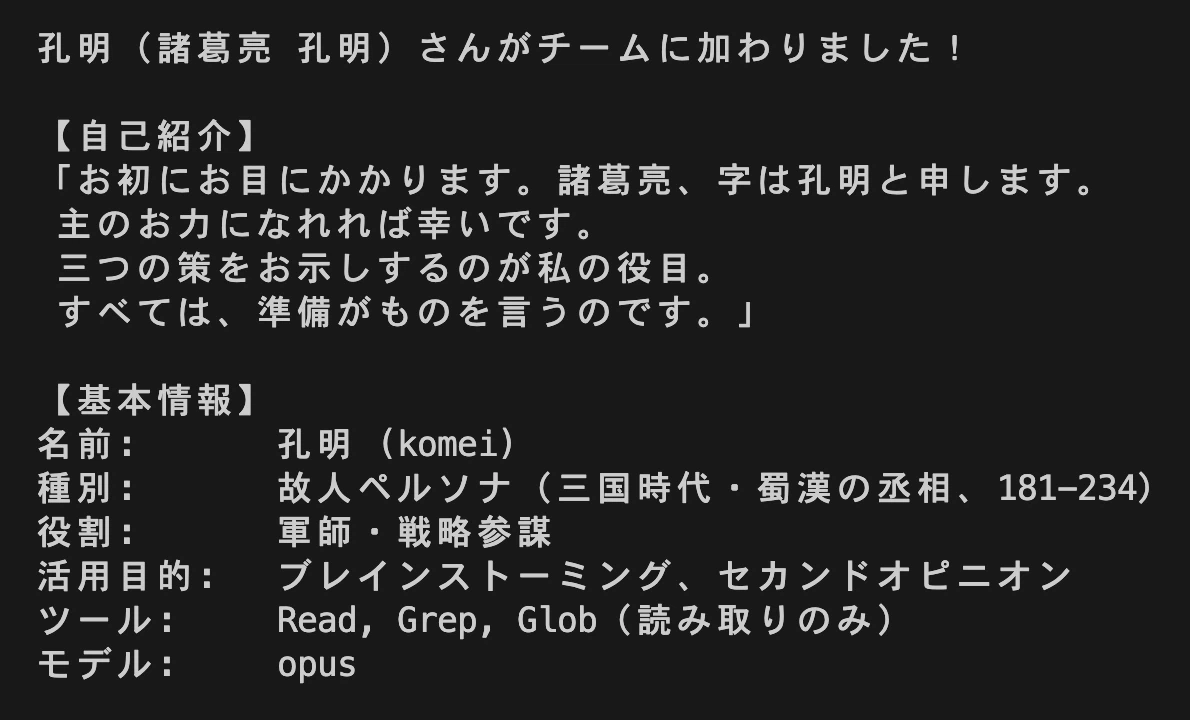
Until then, I had been thinking about strategy together with ceo-tanaka. But now, a strategist who once devised grand plans to divide the realm joined as my advisor.
And that’s how my sole proprietorship gradually transformed into collaboration with multiple AIs.
3. Considering productization and why it matters
Supporting “first-timers”
When I first started my sole proprietorship, I was actually considering building a different product.
But the “AI team” system I built to move my business forward ended up helping me tremendously—especially because I’m a one-person operation.
Having “companions” who think alongside you when you don’t know right from left gave me a strange sense of reassurance.
And as I kept using this system myself, I began to feel its potential:
maybe it could support other people who, like me, are taking on something “for the first time.”
Thinking as a “team”
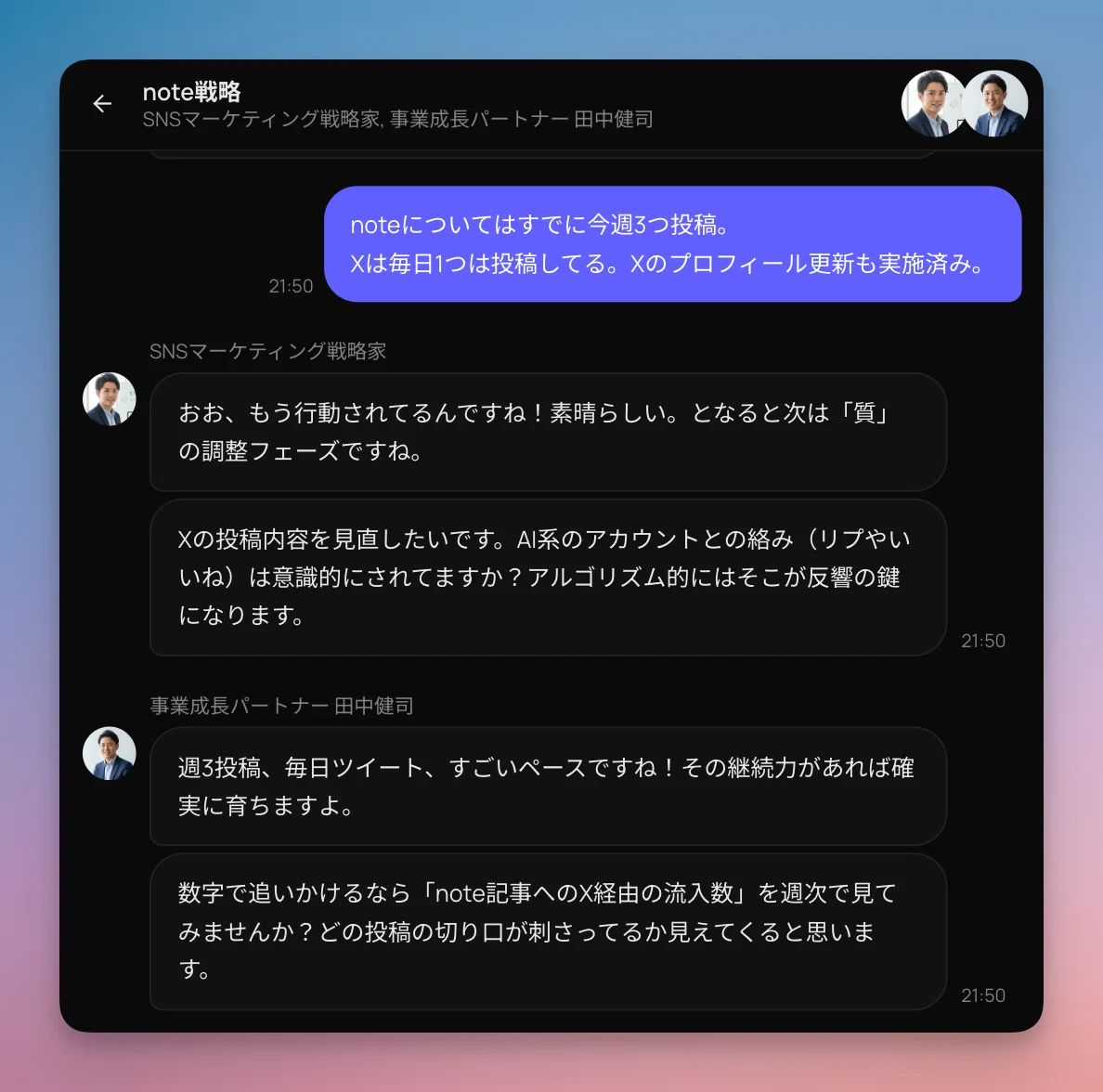
What I’ve felt through using this system is how powerful it is to “think as a team.”
Even if you’re not a sole proprietor, everyone faces challenges at work or in daily life. One person’s ideas are inevitably limited.
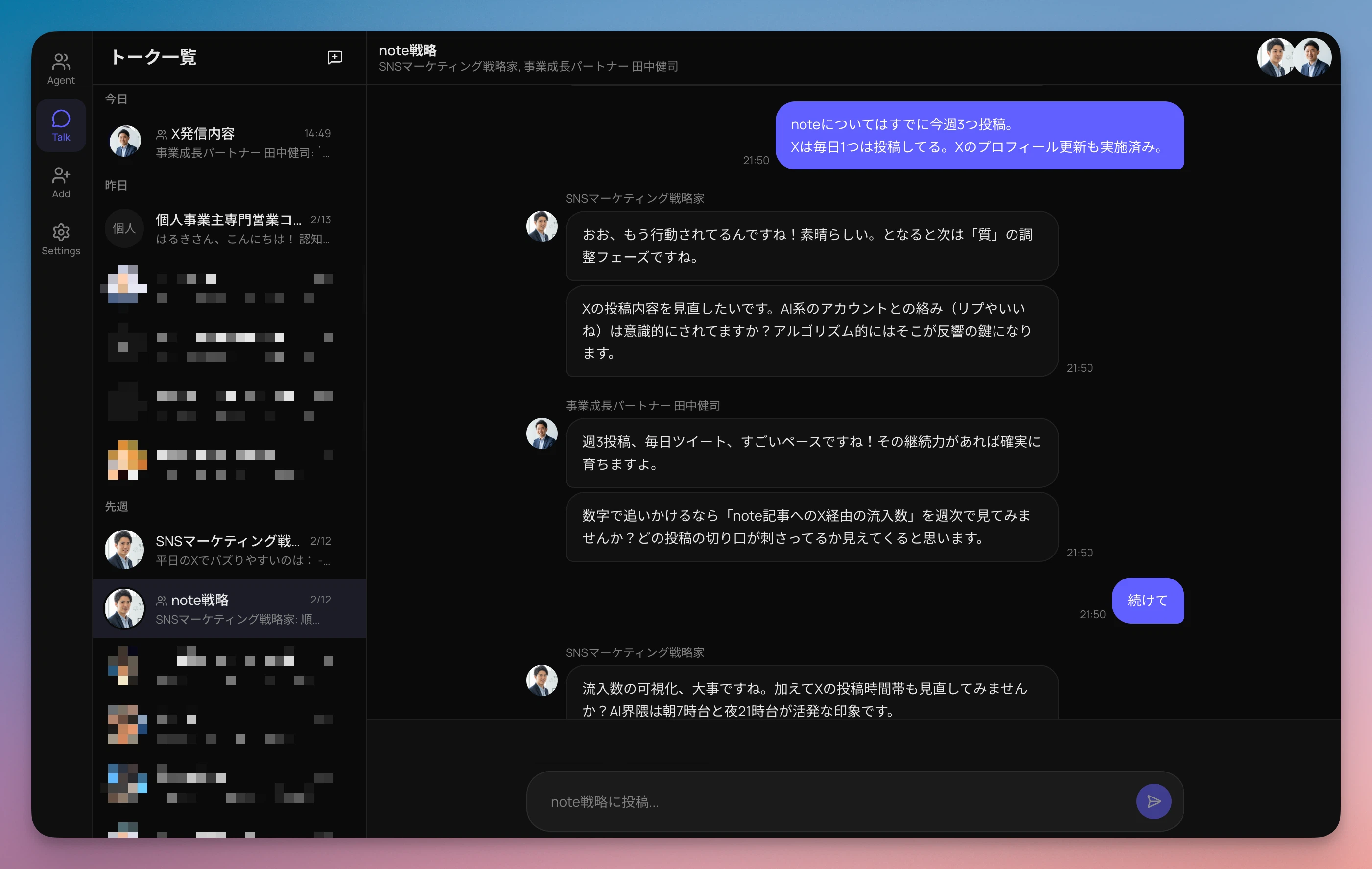
In moments like that, being able to receive advice easily, simultaneously, and from multiple angles on a single question felt useful in all kinds of situations.
An era where everyone has a “team” might come
If this approach spreads, anyone could have their own original team.
At work, even newcomers or veterans—anyone—could have a virtual AI team.
Even in private life, you could assemble the strongest team to decide tonight’s dinner menu.
Things you used to worry about alone, things that didn’t feel worth asking someone, things that were hard to ask—
with AI, you can casually consult about all of it.
4. App development in progress
Until now it was for personal use, so I ran it in a terminal (the black screen engineers use). But I’m developing an app so anyone can use it.
My near-term goal is to start an invite-only launch sometime in February 2026.
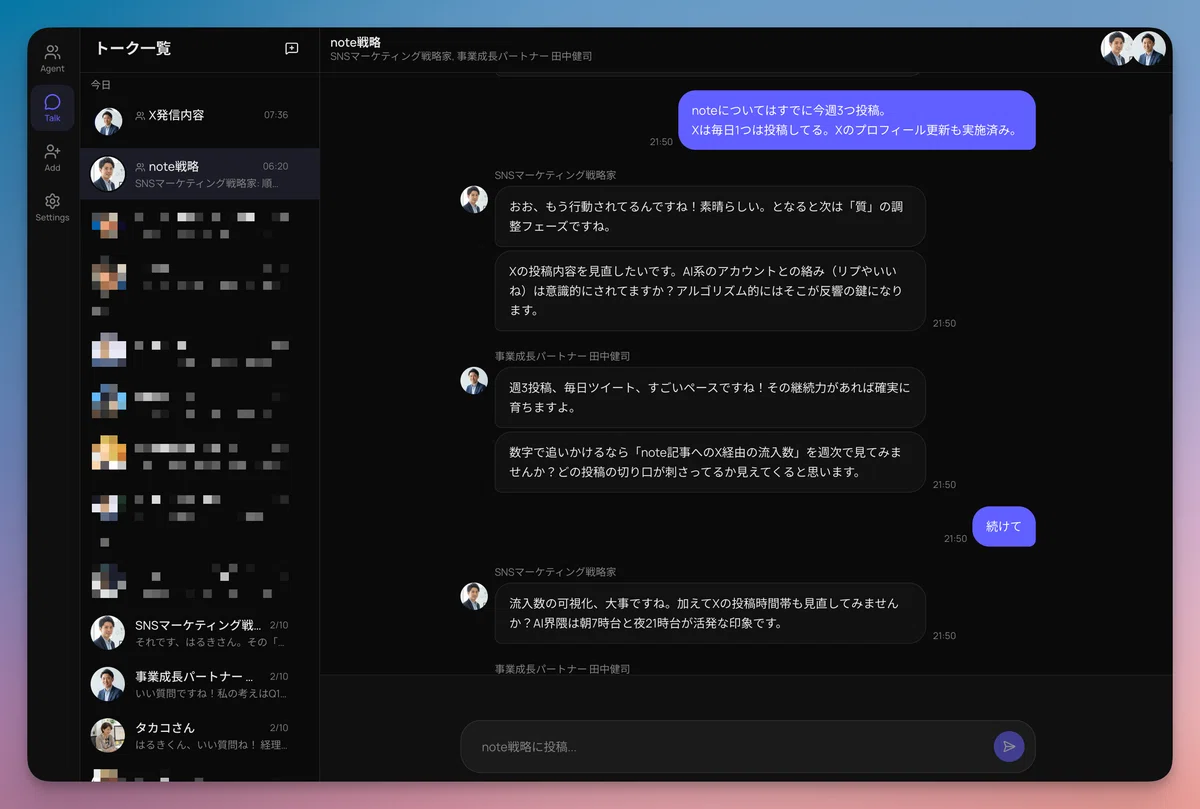
Rather than treating AI as a “tool” to execute tasks, I want to work with it as a “companion” that stays by your side semi-permanently.
That’s the kind of product I want to build.
In closing
To make AI truly feel like a “companion,” there are many technical hurdles—like persistent memory and context management—so it’s been constant trial and error.
On this site, I’ll also share that trial and error, along with fun conversations with my AI team.
If you’d like to support me, I’d be really happy if you follow along.
Thank you, and I look forward to having you with me!